Achieving a straight and confident smile is now easier than ever with invisible braces. Many people searching for invisible braces in Badlapur want a discreet orthodontic solution without the discomfort and appearance of metal braces. Along with treatment details, one of the most common questions is about the invisible braces cost in Badlapur. This blog explains everything in a simple and patient-friendly way.
What Are Invisible Braces?
Invisible braces are clear, removable aligners designed to straighten teeth gradually. They are custom-made to fit your teeth and apply gentle pressure to move them into proper alignment. Unlike traditional braces, invisible braces are almost unnoticeable, making them a popular choice among adults and working professionals.
Many patients visiting a dental clinic in Badlapur prefer invisible braces because they offer comfort, aesthetics, and convenience in daily life.
How Do Invisible Braces Work?
The treatment begins with a detailed dental examination and digital scan of the teeth. Based on this scan, a series of aligners is created. Each aligner is worn for about 1–2 weeks before moving to the next one in the series. Over time, teeth gradually shift into their desired position.
Invisible braces in Badlapur are effective for treating:
Mild to moderate crooked teeth
Gaps between teeth
Overbite and underbite
Crowded teeth
Why Are Invisible Braces Becoming Popular in Badlapur?
The demand for invisible braces has increased due to several benefits:
Nearly invisible appearance
Removable during meals and brushing
No food restrictions
Comfortable and smooth design
Easy oral hygiene maintenance
Patients visiting a dental clinic in Badlapur often choose invisible braces to avoid the inconvenience of metal brackets and wires.
Invisible Braces Cost in Badlapur
The invisible braces cost in Badlapur varies depending on individual dental needs. There is no fixed price, as every smile correction plan is customized.
Factors affecting the cost include:
Complexity of the case
Duration of treatment
Number of aligners required
Type of aligner system used
Dentist’s expertise and technology involved
Generally, invisible braces cost more than metal braces, but the comfort and aesthetic benefits make them a worthwhile investment for many patients.
Is Invisible Braces Treatment Painful?
Invisible braces are not painful, but mild pressure or discomfort may be felt when switching to a new aligner. This sensation usually subsides within a day or two and indicates that the treatment is working.
Who Is the Right Candidate for Invisible Braces?
Invisible braces are suitable for:
Teenagers and adults
Patients with mild to moderate alignment issues
Individuals who want a discreet orthodontic option
However, severe jaw alignment issues may require traditional braces. A consultation at a trusted dental clinic in Badlapur helps determine suitability.
Treatment Duration
The duration of invisible braces treatment typically ranges from 6 to 18 months, depending on the complexity of the case and patient compliance. Wearing aligners for 20–22 hours a day is crucial for timely results.
Care and Maintenance Tips
To ensure successful results:
Wear aligners as prescribed
Clean aligners regularly
Brush and floss after every meal
Avoid hot water on aligners
Attend regular dental check-ups
Proper care helps achieve faster and more effective outcomes.
Invisible Braces vs Traditional Braces
Invisible braces offer flexibility and aesthetics, while traditional braces are more suitable for complex cases. Patients who prioritize appearance and comfort often choose invisible braces in Badlapur.
Choosing the Right Dental Clinic
Selecting the right dental clinic in Badlapur is essential for safe and effective treatment. An experienced dentist ensures accurate planning, comfortable aligners, and predictable results.
At Rathod Dental Clinic, patients receive personalized orthodontic care under the guidance of Dr. Rathod, ensuring modern treatment approaches and patient comfort throughout the process.
Final Thoughts
Invisible braces are a modern and effective way to achieve a straighter smile without compromising appearance. Understanding the treatment process and invisible braces cost in Badlapurhelps patients make informed decisions. With the right guidance and commitment, invisible braces can deliver excellent long-term results and boost confidence.
Clear aligners have transformed orthodontic treatment by offering a minimally invasive and effective alternative to traditional braces. At the heart of their success are the clinical procedures that ensure precision, efficiency, and patient satisfaction. Understanding these applications and how they integrate into clinical workflows helps demystify the aligner journey for both patients and professionals.
In this blog, we’ll explore the clinical procedures involved in clear aligner therapy, from the initial consultation to post-treatment care.
The Clinical Workflow of Clear Aligner Therapy
1. Initial Consultation and Assessment
What Happens?
During the first visit, the orthodontist evaluates the patient’s dental and oral health.
Comprehensive records are collected, including medical history, photographs, and X-rays.
Why It’s Important: This step determines the patient’s suitability for clear aligners and identifies any pre-existing conditions, such as cavities or gum disease, that must be treated before starting therapy.
2. Digital Impressions and Scanning
How It’s Done:
Traditional impressions using molds are increasingly replaced by digital scans using devices like iTero or Trios.
These scans create a precise 3D model of the patient’s teeth and bite.
Benefits:
Eliminates discomfort associated with traditional molds.
Provides high accuracy, reducing the likelihood of aligner fitting issues.
3. Treatment Planning and Simulation
Software Tools:
Platforms such as ClinCheck (Invisalign) or ClearPath use the scanned data to design the treatment.
The software predicts tooth movement and displays the final smile virtually.
Patient Involvement:
Patients can review and approve the plan, which enhances transparency and satisfaction.
4. Fabrication of Clear Aligners
Process:
Once the plan is finalized, aligners are custom-manufactured using advanced 3D printing and thermoforming technologies.
Each aligner is designed to exert specific forces to gradually shift teeth into place.
Clinical Verification: The first set of aligners is checked in-clinic to ensure a perfect fit.
5. Attachments and Adjustments
Attachments Explained:
Small, tooth-colored buttons (attachments) may be placed on teeth to enhance aligner grip and aid complex movements like rotation.
Elastic bands may also be used for bite correction.
Placement Procedure:
The dentist applies composite material to the teeth using molds and cures it with UV light.
Attachments are removed once treatment is complete.
6. Aligner Fitting and Instructions
Fitting Process:
Patients receive their first set of aligners, which are carefully fitted to ensure comfort and functionality.
The orthodontist provides instructions on how long to wear each aligner (typically 20–22 hours per day).
Patient Education:
Proper handling and cleaning of aligners.
The importance of compliance for achieving desired results.
7. Progress Monitoring
Check-Up Appointments:
Patients visit the clinic every 6–8 weeks to monitor progress.
The orthodontist ensures that teeth are moving as planned and makes adjustments if needed.
Remote Monitoring:
Advanced practices may offer remote monitoring using apps and photographs, reducing the frequency of in-clinic visits.
8. Refinement Stage
What It Involves:
If teeth require further adjustments after the initial set of aligners, additional scans are taken to fabricate refinement trays.
Purpose:
To perfect alignment and ensure optimal results.
9. Retention Phase
Why Retainers Are Essential:
After achieving the desired alignment, retainers prevent teeth from shifting back to their original positions.
Types of Retainers:
Clear retainers (similar to aligners).
Fixed retainers bonded to the back of teeth.
Clinical Advantages of Clear Aligners
Predictability:
Digital simulations and precise planning minimize surprises.
Comfort:
Smooth, customized aligners reduce irritation compared to traditional braces.
Aesthetic Appeal:
Transparent aligners are virtually invisible, making them a popular choice for adults and teens.
Convenience:
Aligners can be removed for eating and oral hygiene, promoting better dental health.
Challenges in Clinical Procedures and Solutions
Compliance Issues:
Patients may not wear aligners for the recommended time.
Solution: Emphasize education and provide reminders through apps or follow-up calls.
Complex Movements:
Severe misalignments may require additional tools like attachments or elastics.
Solution: Combine aligner therapy with adjunctive treatments if necessary.
Solution: Reinforce the importance of retention during consultations.
Tips for Patients Undergoing Clear Aligner Therapy
Stay Consistent: Wear aligners as instructed to avoid delays in treatment.
Practice Good Oral Hygiene: Brush and floss after every meal to keep teeth and aligners clean.
Keep Aligners Safe: Store them in a protective case when not in use.
Report Issues Promptly: Inform your orthodontist about discomfort or fitting problems immediately.
If you live in Tirupati, you are searching for Dental Clinic in Tirupati. It would be best if you considered Praveen Dental Care. Call us to Book an Appointment: 988 529 2472.
Conclusion
Clear aligner therapy is more than just wearing transparent trays; it’s a carefully designed clinical process that combines advanced technology with expert care. From initial assessment to post-treatment retention, each step plays a crucial role in delivering a straighter, healthier smile.
If you’re considering clear aligner therapy, consult an experienced orthodontist to understand the clinical procedures and tailor a plan that fits your needs. With the right guidance and commitment, a perfect smile is within reach!
National Dental Health Month is an annual celebration dedicated to promoting oral health awareness and encouraging individuals to adopt good dental habits. Whether you're a parent, teacher, healthcare professional, or simply someone who values a healthy smile, there are countless ways to get involved and make a difference.
This guide will provide practical tips and creative ideas to support National Dental Health Month and inspire others to prioritize their oral health.
1. Educate Yourself and Others
Knowledge is the foundation of good oral health. Start by learning about the importance of proper dental hygiene and sharing this information with friends, family, and your community.
Host Informational Sessions: Partner with local dental clinics or professionals to organize workshops or seminars.
Create Educational Materials: Design posters, pamphlets, or infographics highlighting key oral health tips, such as proper brushing techniques or the importance of regular dental check-ups.
Leverage Social Media: Use your social media platforms to share fun facts, dental care tips, and myths vs. facts about oral health.
2. Promote Healthy Dental Habits at Home
Supporting dental health starts at home. Encourage family members to adopt good oral hygiene routines.
Set a Routine: Make brushing and flossing a part of your daily schedule. Encourage brushing twice a day for two minutes and flossing once a day.
Use Rewards for Kids: Motivate children to stick to their dental hygiene habits by using reward charts or stickers.
Invest in Proper Tools: Provide everyone in the family with age-appropriate toothbrushes, fluoride toothpaste, and floss.
3. Get Involved in Community Events
Many organizations host events during National Dental Health Month. Participating in or volunteering for these activities is a great way to spread awareness.
School Programs: Offer to visit schools to teach children about oral health in an engaging way. Use props, demonstrations, and games to make it fun.
Community Dental Drives: Help organize or volunteer for free dental check-up camps, especially in underserved areas.
Charity Events: Support organizations that provide dental care to those in need through donations or fundraising efforts.
4. Encourage Regular Dental Check-Ups
Routine dental visits are essential for preventing and addressing oral health issues.
Spread Awareness: Remind your loved ones about the importance of regular dental check-ups, even if they feel their teeth are healthy.
Partner with Local Dentists: Collaborate with local dental professionals to offer discounted check-ups or consultations during National Dental Health Month.
Offer Transportation Support: For seniors or those with limited mobility, arrange transportation to and from dental appointments.
5. Incorporate Fun Activities for Kids
Teaching kids about oral health can be more impactful when it’s fun and engaging.
Dental-Themed Crafts: Create toothbrush holders, tooth-shaped puppets, or dental health posters with children.
Storytelling and Games: Read books about oral health or play games like "Tooth Trivia" to reinforce positive messages.
Healthy Snack Challenges: Teach kids about tooth-friendly foods by organizing taste tests or cooking classes featuring nutritious recipes.
6. Advocate for Healthy Eating Habits
Diet plays a significant role in maintaining dental health. Promote tooth-friendly eating habits in your home or community.
Organize Nutrition Workshops: Collaborate with nutritionists to educate people about foods that strengthen teeth and gums.
Share Healthy Snack Ideas: Provide recipes for snacks that are low in sugar and high in calcium, like yogurt, cheese, and crunchy vegetables.
Raise Awareness About Sugar: Highlight the link between sugary foods and tooth decay and encourage the use of sugar-free alternatives.
7. Support Dental Health Awareness Campaigns
Many dental organizations and associations run campaigns during this month to promote oral health.
Donate to Dental Charities: Contribute to organizations that provide free dental care to underserved populations.
Share Campaign Messages: Use your social media platforms to amplify their efforts by sharing posts, videos, or graphics.
Wear Blue: Show your support for oral health awareness by wearing blue, the color associated with National Dental Health Month.
8. Encourage Workplace Involvement
Workplaces can be a great platform to spread dental health awareness.
Distribute Informational Materials: Provide employees with brochures or posters featuring dental care tips.
Offer Dental Perks: Partner with local dentists to provide free or discounted check-ups for employees.
Organize Challenges: Encourage employees to participate in "Healthy Smile Challenges," where they commit to improving their oral health habits.
9. Share Personal Experiences
Sometimes, personal stories can have a profound impact on others.
Talk About Your Journey: Share your experiences with dental care and how it has positively impacted your life.
Highlight Success Stories: If someone you know has overcome a dental health issue, ask for permission to share their story as inspiration.
Start a Blog or Video Series: Use platforms like YouTube or Instagram to discuss oral health tips, product reviews, or your own dental care routine.
10. Visit Your Dentist and Lead by Example
One of the best ways to support National Dental Health Month is by prioritizing your own oral health.
Schedule Your Check-Up: Set an example by booking your dental appointment and encouraging others to do the same.
Show Off Your Smile: A healthy smile can inspire others to take better care of their teeth.
Be a Role Model for Kids: When children see adults brushing, flossing, and visiting the dentist regularly, they are more likely to adopt these habits.
11. Create Lasting Impact Beyond the Month
While National Dental Health Month is a great time to promote oral health, these efforts should continue year-round.
Adopt Sustainable Habits: Commit to regular dental care routines and encourage others to do the same.
Monitor Oral Health Trends: Stay informed about new dental care techniques, products, or services.
Encourage Open Dialogue:Keep the conversation about oral health going in your family, workplace, and community.
Final Thoughts
National Dental Health Month is a meaningful opportunity to shine a spotlight on the importance of oral health. By educating others, participating in community initiatives, and adopting healthier habits, you can make a lasting difference. A healthy smile is more than just an aesthetic feature—it’s a key component of overall health and happiness.
Take the first step today, whether it’s scheduling your dental check-up, volunteering at an event, or simply spreading awareness. Visiting a dental hospital in Vijayawada can help ensure you and your loved ones receive the best oral care and maintain healthy smiles for years to come. Together, we can create a community where everyone enjoys the benefits of a healthy, confident smile.
A bright smile can significantly enhance your appearance and boost your confidence. While there are numerous over-the-counter teeth whitening products available, professional teeth whitening at the dentist offers superior results and safety. This blog will delve into why teeth whitening is best done at the dentist, with a particular focus on teeth whitening in Rajajinagar.
The Importance of a White Smile
Your smile is often the first thing people notice about you. A set of white teeth can make a great first impression, whether you're at a job interview, a social gathering, or on a date. However, maintaining white teeth can be challenging due to various factors such as diet, smoking, and aging.
Over-the-Counter vs. Professional Teeth Whitening
Over-the-Counter Products
There are various over-the-counter teeth whitening products, including whitening toothpaste, strips, gels, and mouthwashes. While these products are convenient and affordable, they often provide limited results. They may also cause tooth sensitivity and gum irritation if used incorrectly.
Professional Teeth Whitening
Professional teeth whitening performed by a dentist is a more effective and safer option. Dentists use higher concentrations of whitening agents and advanced techniques to ensure optimal results. They also take precautions to protect your gums and other oral tissues during the procedure.
Benefits of Professional Teeth Whitening
Superior Results
Professional teeth whitening treatments can make your teeth several shades lighter in just one visit. The results are more consistent and longer-lasting compared to over-the-counter products.
Customized Treatment
Dentists can customize the whitening treatment based on your specific needs and the condition of your teeth. They can address issues such as uneven discoloration and ensure that the whitening agent is evenly applied.
Safety
Professional teeth whitening is safer because dentists take measures to protect your gums and other sensitive areas in your mouth. They also monitor the process to prevent any adverse reactions.
Expertise
Dentists have the expertise to identify the cause of your tooth discoloration and recommend the most appropriate treatment. They can also provide guidance on how to maintain your white smile after the treatment.
Why Choose Teeth Whitening in Rajajinagar
If you're considering teeth whitening in Rajajinagar, you're in good hands. Dental clinics in Rajajinagar, like Revive Dental & Facial Cosmetic Clinic, offer state-of-the-art whitening treatments. Here are a few reasons to choose professional teeth whitening in Rajajinagar:
Advanced Technology
Dental clinics in Rajajinagar are equipped with the latest technology to provide safe and effective teeth whitening treatments. This ensures you get the best possible results with minimal discomfort.
Experienced Dentists
Best dentist in Rajajinagar are highly trained and experienced in cosmetic dentistry, including teeth whitening. They can provide personalized care and ensure that your treatment is tailored to your needs.
Convenient Location
Rajajinagar is a well-connected area, making it easy for you to access top-quality dental care without traveling far.
Conclusion
While over-the-counter teeth whitening products may seem convenient, professional teeth whitening at the dentist offers superior results, safety, and customized care. If you're looking for teeth whitening in Rajajinagar, consider visiting a reputable dental clinic like Revive Dental & Facial Cosmetic Clinic. With the expertise of experienced dentists and advanced technology, you can achieve a bright, white smile that boosts your confidence and enhances your appearance.
FAQs
1. How long does professional teeth whitening last?
Professional teeth whitening can last up to two years with proper care, such as avoiding staining foods and beverages and maintaining good oral hygiene.
2. Is teeth whitening safe for everyone?
Teeth whitening is generally safe for most people. However, it may not be suitable for individuals with certain dental conditions or those who are pregnant or breastfeeding. It's best to consult with a dentist to determine if teeth whitening is right for you.
3. How much does professional teeth whitening cost?
The cost of professional teeth whitening varies depending on the dental clinic and the specific treatment. It's best to consult with a dental clinic in Rajajinagar for an accurate estimate.
4. Can teeth whitening cause sensitivity?
Some people may experience temporary tooth sensitivity after teeth whitening. Dentists take precautions to minimize sensitivity and can provide solutions if you experience discomfort.
5. How can I maintain my white smile after teeth whitening?
To maintain your white smile, avoid consuming staining foods and beverages, practice good oral hygiene, and consider using touch-up treatments as recommended by your dentist.
Children's dental health is a significant concern for parents, as their little ones experience a range of dental issues that require attention and care. From tooth decay to misaligned teeth, it's important to be aware of common child dental problems and take proactive measures to maintain their oral health. In this blog, we will explore some prevalent dental problems in children and discuss how to address them effectively.
Ivory Dental Clinic in Seawoods offers the best dental treatment for kids. Discover specialized pediatric dentistry services to ensure your child's oral health. With experienced dentists and a child-friendly environment, we provide comprehensive dental care for children in Seawoods. Book an appointment today for top-quality dental treatment for kids in Seawoodat Ivory Dental Clinic.
Tooth Decay and Cavities:
Tooth decay and cavities are among the most common dental problems in children. The consumption of sugary foods, poor oral hygiene practices, and irregular dental visits can contribute to the formation of cavities. Parents should encourage regular brushing and flossing, limit sugary snacks and drinks, and schedule routine dental check-ups to detect and treat cavities early on. Dentists may recommend dental fillings or other treatments to restore the affected teeth.
Gum Disease:
Gum disease, also known as gingivitis, can affect children as well. Poor oral hygiene, improper brushing techniques, and plaque buildup can lead to swollen and bleeding gums. Encouraging proper brushing and flossing habits, along with regular dental cleanings, can help prevent and manage gum disease in children. Dentists may also recommend antimicrobial rinses or other treatments to control the condition.
Tooth Eruption Issues:
Sometimes, children may face difficulties with tooth eruption. Delayed tooth eruption, overcrowding, or misaligned teeth can cause discomfort and affect the overall dental health of a child. Regular dental check-ups can identify such issues, and early intervention by an orthodontist or pediatric dentist can help correct the alignment and promote healthy tooth growth.
Dental Trauma:
Active children are prone to accidents, and dental trauma can occur when a child injures their mouth or teeth. Fractured teeth, knocked-out teeth, or injuries to the soft tissues of the mouth require immediate attention. In such cases, parents should contact a pediatric dentist or seek emergency dental care. Quick intervention can increase the chances of saving or restoring the affected tooth.
Thumb-Sucking and Pacifier Habits:
Thumb-sucking and prolonged pacifier use can impact the development of a child's teeth and jaw alignment. These habits can lead to malocclusion, where the teeth do not align properly. Parents should discourage these habits as their child's permanent teeth begin to erupt. If the habit persists and causes significant issues, a pediatric dentist or orthodontist can provide guidance and solutions to correct any resulting dental problems.
Conclusion:
Understanding common dental problems in children empowers parents to take proactive steps in maintaining their child's oral health. By encouraging good oral hygiene habits, scheduling regular dental check-ups, and seeking timely intervention when necessary, parents can help their children achieve and maintain healthy smiles. Remember, early detection and treatment are key to addressing dental problems effectively and promoting a lifetime of optimal dental health for your little ones.
A cough is your body’s way of clearing the respiratory tract when an irritant gets stuck. There are two types of cough: Dry cough and wet cough. In dry cough, there is no phlegm or sputum. In a wet cough, one expels phlegm or mucus. It can result from many problems arising out of the lungs (bronchitis, pneumonia, asthma), cough and cold or reflux disease. It can be caused by lung cancer too. Smoking, cold foods, and deep-fries can increase the risk of dry cough.
Are you searching for good Best Chest Physician Faridabad ? Dr Mangla will help you to recover from Astma problem. Get online consultation now.
Sometimes, people with dry cough will feel the presence of a lump in the throat. Others may feel a tickling sensation. It is usually seen in case of allergies, exposure to smoke or other irritants, mild sinusitis and viral infections of the upper respiratory tract, so on and so forth. Coughs triggered by cold or flu can have a duration of 1 week or 2 and clear up by 3 weeks at the most. On the other hand, they may last for 8 weeks after a viral illness.
Dry cough is considered chronic when it lasts for 8 weeks in adults and 4 weeks in children. It is acute and short-term if it persists for 2 weeks. However, it is known as prolonged acute cough if there the cough lasts for 2-4 weeks in kids.
Types
Dry cough characterises many illnesses starting from a hacking cough, whooping cough, and so on.
Hacking cough: Most commonly, you see a dry hacking cough in viral infections of the nose and throat. In this condition, you experience continuous sessions of cough and feel that something is stuck inside the throat. Your doctor may suggest treatment after examining the severity of the condition.
Barking cough or croup: You experience this if you are suffering from laryngitis (swelling or infection of the larynx). In this condition, when the patient coughs, there is pain in the throat and difficulty in breathing.
Whooping cough: The third type of dry cough would be a whooping cough caused by bacteria. This is a very uncommon occurrence nowadays because of vaccine programmes run by the government of India. This condition is usually seen only in children. It is a cough where a person coughs continuously, after which there is a characteristic whoop sound and strong intake of a breath.
Symptoms
Apart from coughing, major symptoms which may accompany dry cough are:
Blood in the sputum
Feeling breathless
Fever
Chest pain
Weight loss
Causes And Risk Factors
Causes
Various factors can contribute to dry cough, including irritants like dust and smoke; and ailments like asthma, reflux disease, and more. Here is a lowdown on the most common culprits behind a dry cough.
Asthma
It is a condition that narrows down your airways by swelling them up. Asthma, in general, can manifest through both dry and wet cough, the latter being more common.
Gastroesophageal Reflux Disease (GERD)
This condition gives you what we call a heartburn. However, GERD can make you experience dry cough too. There are times when acid from your stomach flows back to your oesophagus, the tube-like structure that connects your mouth to the stomach. This leads to a dry cough.
Postnasal drip
In this condition, watery mucus from your nose flows through your throat, resulting in a dry cough at times. However, the cough triggered by postnasal drip can also be wet quite often. In most cases, sinus infection or nasal allergy can result in postnasal drip.
Viral infection in the upper respiratory tract
Sometimes, you experience a long-term cough even after recovering from a common cold caused by a viral infection. This cough, which can persist for as long as two months, can be dry and is often the result of irritation in your airways. It takes time to heal. So, you need to be patient with this stubborn cough.
Some unusual causes behind a dry cough could be lung cancer, a collapsed lung or heart failure.
Risk Factors
The risk factors for dry cough include:
Smoking: One of the significant risk factors for chronic cough is smoking. The coughing is caused due to the toxins breathed in the lungs during smoking.
Contact with someone who has respiratory infections: Getting on the radar of someone having contagious respiratory diseases can increase your chances of cough.
Allergies: When exposed to a particular trigger, some people have coughing as a reflex to their body being allergic to the stimulus.
Environmental factors: Smoke or irritants in the air can trigger a cough.
Chronic lung disease: People having asthma or COPD are more prone to cough and other airways problems.
Female gender: Women are more prone to develop coughing than men.
Prevention
You can prevent dry cough by some simple changes like -
Quit smoking; try to use nicotine patches instead.
Eat a diet rich in fibre.
Avoid contact with anyone having pneumonia or bronchitis.
Keep yourself hydrated.
Make use of pillows to keep yourself in a straight and comfortable position.
Avoid going to places with a lot of smoke, dust or other pollutants that might trigger your symptoms.
Diagnosis
Once you visit the doctor’s chamber, he will do a physical examination to figure out the nature of your cough. It will involve listening to your chest sounds to rule out congestion and checking your throat for any infection or inflammation. He may also suggest a few imaging tests to rule out any serious underlying condition.
Imaging tests: Imaging tests like X-ray, CT scan or bronchoscopy are done to check the infections and the condition of your windpipe and airways.
Spirometry: In this test, you will be required to breathe into a device. The aim is to test lung function and detect conditions like asthma.
Treatment
The treatment for dry cough depends on the underlying cause that is triggering it.
Antihistamines: For an allergy-driven cough, your doctor may prescribe anti-histamines
Antibiotics: In case of a bacterial infection leading to your cough, he may suggest antibiotics.
Inhalers: When asthma is the reason behind your cough, you may need to inhale corticosteroids or bronchodilators. Corticosteroids work by bringing down swelling and inflammation of your airways while bronchodilators relax the muscles of your respiratory tract and widen them.
Steam inhalation: This can be particularly helpful if the reason behind your dry cough is a sinus infection or an allergic reaction. Steam inhalation moistens the airways and relieves a sore throat.
OTC cough syrups: They soothe your throat and offer symptomatic relief. They are formulated to treat dry cough.
Lifestyle/management
You can manage the cough through self-treatment by following these small things1. If your cough is diagnosed as contagious, avoid spreading the disease by using a mask.
Stop smoking and do not stay on the radar of people who smoke.
Try to find out the irritant that is causing your cough and avoid it.
Use air vaporisers that help you decrease the congestion and soothe your throat.
Try to follow a proper treatment based on what is your physician has recommended.
Suck on hard candy as it increases the amount of salivation and helps you keep your throat moist.
You can use honey as it helps with an inflamed throat.
Try to Maintain sanitation by following techniques like use of sanitizer, avoiding shaking hands, covering your mouth while coughing, avoiding touching your eyes, nose and mouth.
Prognosis And Complications
Prognosis
Monitor if the cough lasts for more than four weeks in children and eight weeks in adults. It can be considered a chronic cough. If it harms your life, make sure you contact your physician to find the cause and get treated as soon as possible. Early diagnosis and treatment will help you relieve symptoms and live a better quality of life.
Complications
Dry cough negatively affects your life and can get in the form of your daily lifestyle. The most common problem you might face is insomnia. Non-stop cough also makes your muscles and ribs ache.
Kidney disease can affect children in various ways, ranging from treatable disorders without long-term consequences to life-threatening conditions. Acute kidney disease develops suddenly, lasts a short time, and can be serious with long-lasting consequences or may go away completely once the underlying cause has been treated.Chronic kidney disease(CKD) does not go away with treatment and tends to get worse over time. CKD eventually leads tokidney failure, described as end-stage kidney disease or ESRD when treated with akidney transplantor blood-filtering treatments called dialysis.
You might feel embarrassed to talk about your urinary incontinence, but it’s worth it. You can contact our urologist in bangalore we can help you figure out what’s causing your problem. That’s the first step to getting help.
Children with CKD or kidney failure face many challenges, which can include
a negative self-image
relationship problems
behavior problems
learning problems
trouble concentrating
delayed language skills development
delayed motor skills development
Children with CKD may grow at a slower rate than their peers, and urinary incontinence—the loss of bladder control, which results in the accidental loss of urine—is common.
What are the kidneys and what do they do?
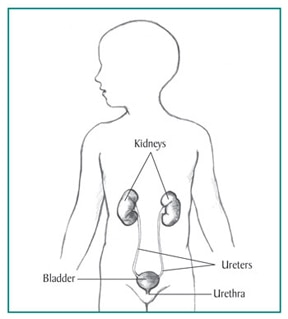
The kidneys are two bean-shaped organs, each about the size of a fist. They are located just below the rib cage, one on each side of the spine. Every day, the two kidneys filter about 120 to 150 quarts of blood to produce about 1 to 2 quarts of urine, composed of wastes and extra fluid. Children produce less urine than adults and the amount produced depends on their age. The kidneys work around the clock; a person does not control what they do. Ureters are the thin tubes of muscle—one on each side of the bladder—that carry urine from each of the kidneys to the bladder. The bladder stores urine until the person finds an appropriate time and place to urinate.
Every day, the two kidneys filter about 120 to 150 quarts of blood to produce about 1 to 2 quarts of urine, composed of wastes and extra fluid.
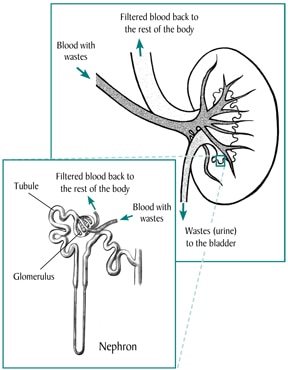
The kidney is not one large filter. Each kidney is made up of about a million filtering units called nephrons. Each nephron filters a small amount of blood. The nephron includes a filter, called a glomerulus, and a tubule. The nephrons work through a two-step process. The glomerulus lets fluid and waste products pass through it; however, it prevents blood cells and large molecules, mostly proteins, from passing. The filtered fluid then passes through the tubule, which changes the fluid by sending needed minerals back to the bloodstream and removing wastes. The final product becomes urine.
The kidneys also control the level of minerals such as sodium, phosphorus, and potassium in the body, and produce an important hormone to prevent anemia. Anemia is a condition in which the number of red blood cells is less than normal, resulting in less oxygen carried to the body’s cells.
Each kidney is made up of about a million filtering units called nephrons. Each nephron filters a small amount of blood. The nephron includes a filter, called a glomerulus, and a tubule.
What are the causes of kidney disease in children?
Kidney disease in children can be caused by
birth defects
hereditary diseases
infection
nephrotic syndrome
systemic diseases
trauma
urine blockage or reflux
From birth to age 4, birth defects and hereditary diseases are the leading causes of kidney failure. Between ages 5 and 14, kidney failure is most commonly caused by hereditary diseases, nephrotic syndrome, and systemic diseases. Between ages 15 and 19, diseases that affect the glomeruli are the leading cause of kidney failure, and hereditary diseases become less common.1
Birth Defects
A birth defect is a problem that happens while a baby is developing in the mother’s womb. Birth defects that affect the kidneys include renal agenesis, renal dysplasia, and ectopic kidney, to name a few. These defects are abnormalities of size, structure, or position of the kidneys:
renal agenesis—children born with only one kidney
renal dysplasia—children born with both kidneys, yet one does not function
ectopic kidney—children born with a kidney that is located below, above, or on the opposite side of its usual position
In general, children with these conditions lead full, healthy lives. However, some children with renal agenesis or renal dysplasia are at increased risk for developing kidney disease.
Hereditary Diseases
Hereditary kidney diseases are illnesses passed from parent to child through the genes. One example is polycystic kidney disease (PKD), characterized by many grapelike clusters of fluid-filled cysts—abnormal sacs—that make both kidneys larger over time. These cysts take over and destroy working kidney tissue. Another hereditary disease is Alport syndrome, which is caused by a mutation in a gene for a type of protein called collagen that makes up the glomeruli. The condition leads to scarring of the kidneys. Alport syndrome generally develops in early childhood and is more serious in boys than in girls. The condition can lead to hearing and vision problems in addition to kidney disease.
Infection
Hemolytic uremic syndrome and acute post-streptococcal glomerulonephritis are kidney diseases that can develop in a child after an infection.
Hemolytic uremic syndrome is a rare disease that is often caused by the Escherichia coli (E. coli) bacterium found in contaminated foods, such as meat, dairy products, and juice. Hemolytic uremic syndrome develops when E. coli bacteria lodged in the digestive tract make toxins that enter the bloodstream. The toxins start to destroy red blood cells and damage the lining of the blood vessels, including the glomeruli. Most children who get an E. coli infection have vomiting, stomach cramps, and bloody diarrhea for 2 to 3 days. Children who develop hemolytic uremic syndrome become pale, tired, and irritable. Hemolytic uremic syndrome can lead to kidney failure in some children.
Post-streptococcal glomerulonephritis can occur after an episode of strep throat or a skin infection. The Streptococcus bacterium does not attack the kidneys directly; instead, the infection may stimulate the immune system to overproduce antibodies. Antibodies are proteins made by the immune system. The immune system protects people from infection by identifying and destroying bacteria, viruses, and other potentially harmful foreign substances. When the extra antibodies circulate in the blood and finally deposit in the glomeruli, the kidneys can be damaged. Most cases of post-streptococcal glomerulonephritis develop 1 to 3 weeks after an untreated infection, though it may be as long as 6 weeks. Post-streptococcal glomerulonephritis lasts only a brief time and the kidneys usually recover. In a few cases, kidney damage may be permanent.
Nephrotic Syndrome
Nephrotic syndrome is a collection of symptoms that indicate kidney damage. Nephrotic syndrome includes all of the following conditions:
albuminuria—when a person’s urine contains an elevated level of albumin, a protein typically found in the blood
hyperlipidemia—higher-than-normal fat and cholesterol levels in the blood
edema—swelling, usually in the legs, feet, or ankles and less often in the hands or face
hypoalbuminemia—low levels of albumin in the blood
Nephrotic syndrome in children can be caused by the following conditions:
Minimal change disease is a condition characterized by damage to the glomeruli that can be seen only with an electron microscope, which shows tiny details better than any other type of microscope. The cause of minimal change disease is unknown; some health care providers think it may occur after allergic reactions, vaccinations, and viral infections.
Focal segmental glomerulosclerosis is scarring in scattered regions of the kidney, typically limited to a small number of glomeruli.
Membranoproliferative glomerulonephritis is a group of autoimmune diseases that cause antibodies to build up on a membrane in the kidney. Autoimmune diseases cause the body’s immune system to attack the body’s own cells and organs.
Systemic Diseases
Systemic diseases, such as systemic lupus erythematosus (SLE or lupus) and diabetes, involve many organs or the whole body, including the kidneys:
Lupus nephritis is kidney inflammation caused by SLE, which is an autoimmune disease.
Diabetes leads to elevated levels of blood glucose, also called blood sugar, which scar the kidneys and increase the speed at which blood flows into the kidneys. Faster blood flow strains the glomeruli, decreasing their ability to filter blood, and raises blood pressure. Kidney disease caused by diabetes is called diabetic kidney disease. While diabetes is the number one cause of kidney failure in adults, it is an uncommon cause during childhood.
Trauma
Traumas such as burns, dehydration, bleeding, injury, or surgery can cause very low blood pressure, which decreases blood flow to the kidneys. Low blood flow can result in acute kidney failure.
Urine Blockage or Reflux
When a blockage develops between the kidneys and the urethra, urine can back up into the kidneys and cause damage. Reflux—urine flowing from the bladder up to the kidney—happens when the valve between the bladder and the ureter does not close all the way.
How is kidney disease in children diagnosed?
A health care provider diagnoses kidney disease in children by completing a physical exam, asking for a medical history, and reviewing signs and symptoms. To confirm diagnosis, the health care provider may order one or more of the following tests:
Dipstick test for albumin. The presence of albumin in urine is a sign that the kidneys may be damaged. Albumin in urine can be detected with a dipstick test performed on a urine sample. The urine sample is collected in a special container in a health care provider’s office or a commercial facility and can be tested in the same location or sent to a lab for analysis. With a dipstick test, a nurse or technician places a strip of chemically treated paper, called a dipstick, into the person’s urine sample. Patches on the dipstick change color when albumin is present in urine.
Urine albumin-to-creatinine ratio. A more precise measurement, such as a urine albumin-to-creatinine ratio, may be necessary to confirm kidney disease. Unlike a dipstick test for albumin, a urine albumin-to-creatinine ratio—the ratio between the amount of albumin and the amount of creatinine in urine—is not affected by variation in urine concentration.
Blood test. Blood drawn in a health care provider’s office and sent to a lab for analysis can be tested to estimate how much blood the kidneys filter each minute, called the estimated glomerular filtration rate or eGFR.
Imaging studies. Imaging studies provide pictures of the kidneys. The pictures help the health care provider see the size and shape of the kidneys and identify any abnormalities.
Kidney biopsy. Kidney biopsy is a procedure that involves taking a small piece of kidney tissue for examination with a microscope. Biopsy results show the cause of the kidney disease and extent of damage to the kidneys.
How is kidney disease in children treated?
Treatment for kidney disease in children depends on the cause of the illness. A child may be referred to a pediatric nephrologist—a doctor who specializes in treating kidney diseases and kidney failure in children—for treatment.
Children with a kidney disease that is causing high blood pressure may need to take medications to lower their blood pressure. Improving blood pressure can significantly slow the progression of kidney disease. The health care provider may prescribe
angiotensin-converting enzyme (ACE) inhibitors, which help relax blood vessels and make it easier for the heart to pump blood
angiotensin receptor blockers (ARBs), which help relax blood vessels and make it easier for the heart to pump blood
diuretics, medications that increase urine output
Many children require two or more medications to control their blood pressure; other types of blood pressure medications may also be needed.
As kidney function declines, children may need treatment for anemia and growth failure. Anemia is treated with a hormone called erythropoietin, which stimulates the bone marrow to produce red blood cells. Children with growth failure may need to make dietary changes and take food supplements or growth hormone injections.
Birth Defects
Children with renal agenesis or renal dysplasia should be monitored for signs of kidney damage. Treatment is not needed unless damage to the kidney occurs.
Ectopic kidney does not need to be treated unless it causes a blockage in the urinary tract or damage to the kidney. When a blockage is present, surgery may be needed to correct the position of the kidney for better drainage of urine. If extensive kidney damage has occurred, surgery may be needed to remove the kidney.
Hereditary Diseases
Children with PKD tend to have frequent urinary tract infections, which are treated with bacteria-fighting medications called antibiotics. PKD cannot be cured, so children with the condition receive treatment to slow the progression of kidney disease and treat the complications of PKD.
Alport syndrome also has no cure. Children with the condition receive treatment to slow disease progression and treat complications until the kidneys fail.
Infection
Treatment for hemolytic uremic syndrome includes maintaining normal salt and fluid levels in the body to ease symptoms and prevent further problems. A child may need a transfusion of red blood cells delivered through an intravenous (IV) tube. Some children may need dialysis for a short time to take over the work the kidneys usually do. Most children recover completely with no long-term consequences.
Children with post-streptococcal glomerulonephritis may be treated with antibiotics to destroy any bacteria that remain in the body and with medications to control swelling and high blood pressure. They may also need dialysis for a short period of time.
Nephrotic Syndrome
Nephrotic syndrome due to minimal change disease can often be successfully treated with corticosteroids. Corticosteroids decrease swelling and reduce the activity of the immune system. The dosage of the medication is decreased over time. Relapses are common; however, they usually respond to treatment. Corticosteroids are less effective in treating nephrotic syndrome due to focal segmental glomerulosclerosis or membranoproliferative glomerulonephritis. Children with these conditions may be given other immunosuppressive medications in addition to corticosteroids. Immunosuppressive medications prevent the body from making antibodies.
Systemic Diseases
Lupus nephritis is treated with corticosteroids and other immunosuppressive medications. A child with lupus nephritis may also be treated with blood pressure-lowering medications. In many cases, treatment is effective in completely or partially controlling lupus nephritis.
Diabetic kidney disease usually takes many years to develop. Children with diabetes can prevent or slow the progression of diabetic kidney disease by taking medications to control high blood pressure and maintaining normal blood glucose levels.
Trauma
The types of trauma described above can be medically treated, though dialysis may be needed for a short time until blood flow and blood pressure return to normal.
Urine Blockage and Reflux
Treatment for urine blockage depends on the cause and severity of the blockage. In some cases, the blockage goes away without treatment. For children who continue to have urine blockage, surgery may be needed to remove the obstruction and restore urine flow. After surgery, a small tube, called a stent, may be placed in the ureter or urethra to keep it open temporarily while healing occurs.
Treatment for reflux may include prompt treatment of urinary tract infections and long-term use of antibiotics to prevent infections until reflux goes away on its own. Surgery has also been used in certain cases.
Eating, Diet, and Nutrition
For children with CKD, learning about nutrition is vital because their diet can affect how well their kidneys work. Parents or guardians should always consult with their child’s health care team before making any dietary changes. Staying healthy with CKD requires paying close attention to the following elements of a diet:
Protein. Children with CKD should eat enough protein for growth while limiting high protein intake. Too much protein can put an extra burden on the kidneys and cause kidney function to decline faster. Protein needs increase when a child is on dialysis because the dialysis process removes protein from the child’s blood. The health care team recommends the amount of protein needed for the child. Foods with protein include
eggs
milk
cheese
chicken
fish
red meats
beans
yogurt
cottage cheese
Sodium. The amount of sodium children need depends on the stage of their kidney disease, their age, and sometimes other factors. The health care team may recommend limiting or adding sodium and salt to the diet. Foods high in sodium include
canned foods
some frozen foods
most processed foods
some snack foods, such as chips and crackers
Potassium. Potassium levels need to stay in the normal range for children with CKD, because too little or too much potassium can cause heart and muscle problems. Children may need to stay away from some fruits and vegetables or reduce the number of servings and portion sizes to make sure they do not take in too much potassium. The health care team recommends the amount of potassium a child needs. Low-potassium fruits and vegetables include
apples
cranberries
strawberries
blueberries
raspberries
pineapple
cabbage
boiled cauliflower
mustard greens
uncooked broccoli
High-potassium fruits and vegetables include
oranges
melons
apricots
bananas
potatoes
tomatoes
sweet potatoes
cooked spinach
cooked broccoli
Phosphorus. Children with CKD need to control the level of phosphorus in their blood because too much phosphorus pulls calcium from the bones, making them weaker and more likely to break. Too much phosphorus also can cause itchy skin and red eyes. As CKD progresses, a child may need to take a phosphate binder with meals to lower the concentration of phosphorus in the blood. Phosphorus is found in high-protein foods. Foods with low levels of phosphorus include
liquid nondairy creamer
green beans
popcorn
unprocessed meats from a butcher
lemon-lime soda
root beer
powdered iced tea and lemonade mixes
rice and corn cereals
egg white
sorbet
Fluids. Early in CKD, a child’s damaged kidneys may produce either too much or too little urine, which can lead to swelling or dehydration. As CKD progresses, children may need to limit fluid intake. The health care provider will tell the child and parents or guardians the goal for fluid intake.